
Set up and AssemblyUpdated 7 days ago
Boogie Assembly & First Use Guide
Please read this guide before assembling or using your Boogie for the first time.
Assembly
1. Assemble the Trolley
Assemble the trolley first so you have a stable platform for inflating the Boogie and installing the battery.
Inflate the tyres using a bike pump. Do not over inflate them, as they can bulge when they get hot in the sun. Use the supplied cardboard cut-outs as a guide for the correct tyre size.
Assemble the trolley as shown in the photo below.
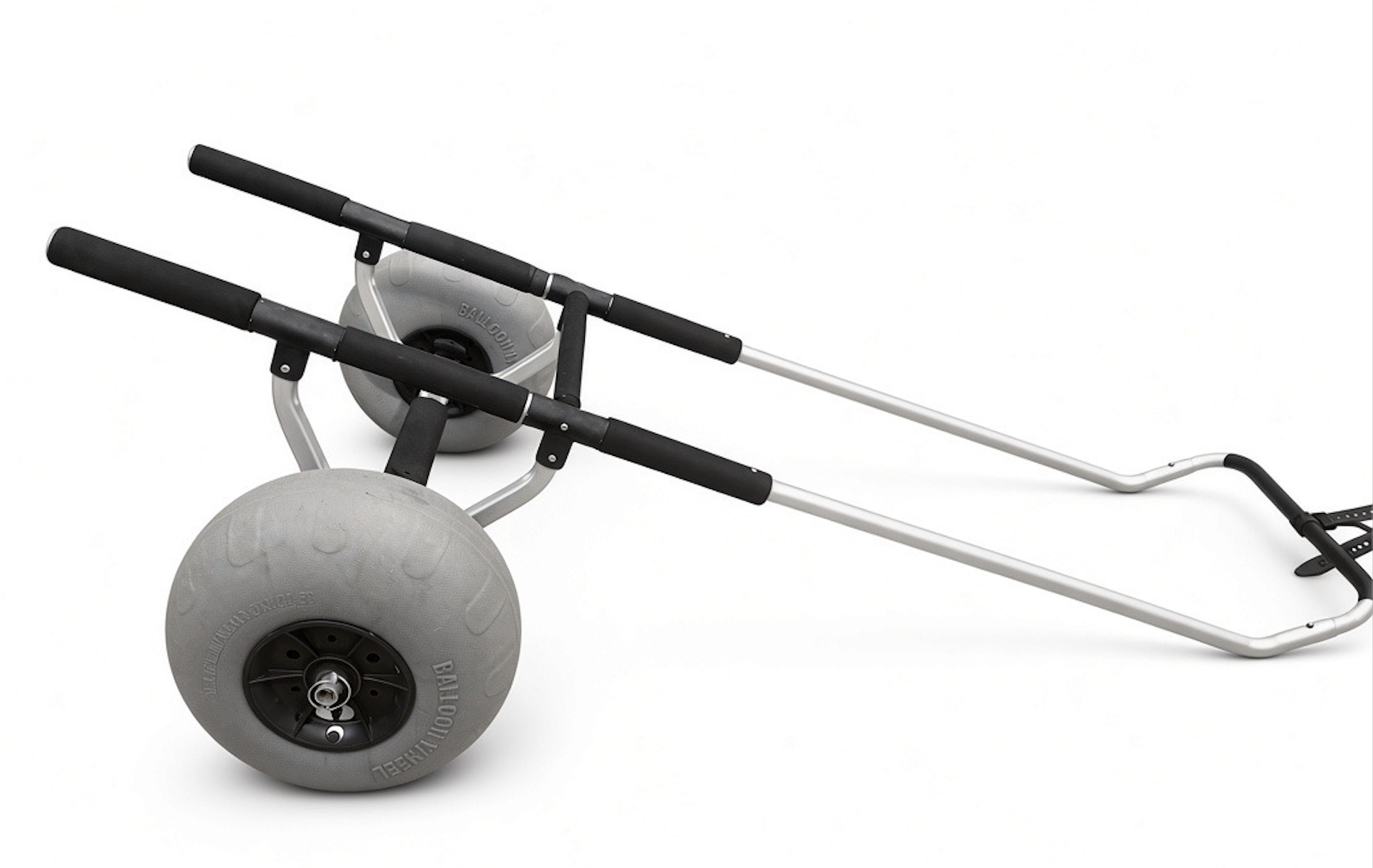
Remove the strap from the front handle of the Boogie and place it around the trolley handle. This is all that is needed to secure the Boogie to the trolley for transport and makes launching quick and easy.
When walking to the beach, place the Remote in the front handle of the Boogie and turn it on. This allows it to acquire GPS reception while you walk.
2. Unpack the Boogie
Unfold the Boogie and place it on the trolley.
The Remote is packed inside the Boogie for shipping.
3. Open and Check the Zip
The waterproof zip may be stiff for the first few uses and can be a little awkward while the Boogie is deflated.
Hold the front handle firmly and pull the zipper slider directly backwards.
The zip is both waterproof and airtight, so looking after it and closing it correctly is critical.
Keep it clean. Avoid sand at all costs. Never open or close the zip on a sandy beach.
Keep it lubricated with silicone grease.
Always close the zip fully when not in use — ALL THE WAY CLOSED.
Before every use, visually check that every tooth is correctly engaged.
Run your finger along the entire zip while visually checking it.
Checking the zip is as important as checking the bungs are installed in a boat or checking your harness before rock climbing.
Boogies have been damaged because the zip was not properly checked before entering the water.
If you have difficulty seeing the zip clearly, use your glasses, a magnifying glass, or ask someone else to check it.
More information on zip care and troubleshooting can be found here.
4. Inflate the Hull
Start by inflating the main hull to approximately 1 PSI.
Before fully inflating, check the position of the Control Box:
The rails on the Control Box need to sit underneath the inner walls of the hull.
Once everything is positioned correctly, inflate the hull to 10 PSI.
Do not exceed 10 PSI.
Be aware that pressure will increase as the Boogie heats up. Never leave an already fully inflated Boogie in a hot car or other hot environment where the pressure could exceed 10 PSI.
5. Install the Prop
Turn the Boogie over and install the prop using a 13 mm socket.
Pay particular attention to the prop pin:
The pin must pass through the hole in the motor shaft.
The pin must then locate correctly in the shallow recess on the back of the prop.
Incorrect installation can damage the tail cone and require replacement.
Firmly tighten the prop nut.
If the nut is left loose, the prop can slide backwards, allowing the pin to fall out — and you may be swimming home.
6. Install the Battery
Install the battery with:
The handle facing the Control Box.
The label facing upwards.
Move the battery straps completely out of the way before inserting the battery to avoid damaging the hull.
Secure the battery firmly with the straps, but do not overtighten them. Excessive force can damage the D-rings that secure the battery.
For rough conditions or shorebreak:
Place a rolled-up beach towel between the battery and the straps.
Wedge the Remote case securely in front of the battery.
This helps lock the battery more securely in position.
Powering On the Boogie
Always use this order:
Install the battery in the Boogie.
Plug in the battery connectors. Rotate and pull them to ensure they are properly latched in place.
Turn the battery ON.
Powering Off the Boogie
The order is important:
Unplug the battery connectors FIRST by pressing on the small buttons on the connectors.
Then turn the battery OFF.
Always follow this shutdown procedure. Turning the battery off before disconnecting it from the Boogie could damage the battery and may result in a costly repair.
Once disconnected, close the zip fully.
More information about battery use, charging and storage can be found here.
Connect the Tow Rope
- Pass the loop though the D ring on the back of the Boogie
- Pull the thin thread to help expand the loop
- Fit the loop over the ball, and pull the loop tight
- The thin thread can be removed if desired, as after a few uses the loop becomes easier to enlarge.
Before First Use
Update the Firmware
Before your first session, make sure both the Boogie and Remote are running the latest firmware.
Firmware update instructions are available here.
Keeping your firmware up to date is a warranty requirement.
Setup Before Entering the Water
1. Power On
With the battery installed and connected, turn the battery ON.
The Boogie will automatically calibrate its steering during startup.
Do not obstruct the steering motor while calibration is taking place. If the motor becomes stuck or obstructed, the steering may not centre correctly and the Boogie may pull to one side while towing.
If you notice this once you're in the water, reboot the Boogie from the Remote:
Settings → Firmware Update → Reboot Boogie
After calibration the propeller will be positioned slightly to the left, this is to counter the prop torque during take off. Once on foil the rudder will automatically straighten so that the Boogie will track straight. Look up Launch Control and Manual Rudder Offset in the remote guide for more detailed information.
2. Check the Remote
The Remote is pre-paired with your Boogie.
Turn it on and confirm that it connects to the Boogie correctly.
3. Check the Antenna
Make sure the Boogie's antenna is vertical.
An incorrectly positioned antenna can significantly reduce communication range.
The antenna is fragile. Do not pull on it.
4. Close and Check the Zip
Before entering the water:
Close the zip all the way.
Visually inspect the entire length of the zip.
Make sure every tooth is correctly engaged.
Run your finger along the zip while checking it.
Do this every single time you use the Boogie.
Checking the zip is as important as checking the bungs in a boat or checking your harness before rock climbing.
Boogies have been damaged because users entered the water without noticing that the zip was not completely sealed.
If you cannot see the zip clearly, use your glasses, a magnifying glass, or ask someone else to check it.
More information on zip care and troubleshooting can be found here.
5. Inflate the Top Shell
Inflate the top shell to approximately 1 PSI.
Do not over inflate it. Too much pressure can:
Damage the Boogie.
Make the Boogie handle poorly.
Cause porpoising while underway.
As a simple guide, 1 PSI is approximately the maximum pressure you can generate by inflating it with your mouth.
Ready to Ride?
Before taking your Boogie out for the first time, please read the First Use Guide.
It contains important information about safe operation, launching and handling your Boogie on the water.